Where to eat on Príncipe Island when you leave the resort
Knowing where to eat on Príncipe Island starts with understanding Santo António’s rhythm. The capital may look sleepy from a Sundy Praia transfer car, yet its streets hold the most characterful food and drink experiences on the island. If you care about how your travel spend shapes this small African biosphere reserve, you will want at least a few meals in town rather than every plate inside a hotel gate.
Most luxury guests arrive via São Tomé, then continue to the smaller island Príncipe on a short hop over the islands of the Gulf of Guinea. Once you check into Sundy Praia, Belo Monte or Roça Sundy, the temptation is to let the resort handle every dish, every coffee, every glass of wine. That is comfortable, but it keeps the economic impact of your time on the island São Tomé and Príncipe locked inside a single property instead of circulating through local kitchens in Santo António.
Think of this article as your practical travel guide to where to eat on Príncipe Island beyond the polished hotel menus. It maps the short drive from the forested bays of Banana Beach or the clifftop of Belo Monte down to the riverfront streets of Santo António, where grilled fish smokes over charcoal and salt and pepper season octopus stews. It also explains how the same palm oil and herbs that flavour a family lunch in town appear, reimagined, in the fine dining dishes at Roça Sundy and Sundy Praia.
From Sundy Praia and Belo Monte to Santo António: the journey to lunch
The question of where to eat on Príncipe Island usually begins at reception, when you ask how to reach Santo António for dinner. From Sundy Praia, the drive to town takes around 25 to 30 minutes along a narrow road that cuts through dense island forest and past the old roça clearings that once defined the economy of São Tomé and Príncipe. From Belo Monte, perched above Banana Beach on the north of the island Príncipe, you drop down through cacao groves before the road levels out near the bay.
Hotel teams at Sundy Praia, Belo Monte and Roça Sundy will arrange a driver, or you can coordinate with a local guide who knows every bend and every roadside stall. This is not South America or the Middle East with multilane highways ; it is a compact African island where time stretches, and where a ten kilometre journey can feel like a small expedition. That slower pace is part of the charm, and it is why a focused travel guide to Príncipe without São Tomé, such as an in depth look at why the smaller island deserves its own trip, helps you plan evenings in town rather than defaulting to the resort.
Once you reach Santo António, everything is walkable within a few hundred metres, which makes it easy to sample several local food and drink spots in a single evening. You might start with a strong Portuguese style coffee near the river, then move on to grilled fish at a simple restaurant, and finish with artisanal ice cream at Restaurante Romar. The compact scale also means your spending stays hyper local, supporting families who live year round in this corner of Africa rather than international owners based in Europe or the United States.
Complexo Beira Mar and the waterfront: Santo António’s lunch institutions
Ask any driver where to eat on Príncipe Island at lunchtime, and Complexo Beira Mar will usually be the first answer. This covered terrace on the waterfront in Santo António has become a midday institution, specialising in fish, octopus and soup that feel perfectly tuned to the humid air rolling off the bay. Plates are generous, the seasoning leans on salt and pepper and local herbs, and the atmosphere is a blend of office workers, guides and hotel guests who have slipped away from Sundy Praia or Roça Sundy for a few hours.
Nearby, Restaurante Bar Passó overlooks the same curve of water, serving a daily meat or fish dish that changes with the catch and the market. Petisqueira Cantinho Alegre, run by owner Vita, focuses on grilled fish and other local dishes that show how São Tomé and Príncipe’s cuisine sits between Africa, Portugal and the wider Atlantic. When you eat at these places, you are not just tasting food ; you are participating in the community economics that keep Santo António vibrant, because every plate of grilled fish or feijoada pays staff wages and supplier bills on the island itself.
For a more homely experience, Rosa Pão operates as a cultural association that serves home style meals if you order in advance, while D & D offers balanced breakfasts and complete meals at reasonable prices. Fofokices brings a touch of international and European cuisine on a pleasant terrace, which can be a welcome change of pace after several days of African stews and Portuguese inspired dishes. If you are interested in how these restaurants fit into the broader story of roças and hospitality architecture on São Tomé and Príncipe, read this detailed piece on how colonial plantations became the backbone of the islands’ hotel system before you travel.
Dona Antónia’s, obobo and the art of eating at island pace
Evenings in Santo António answer the question of where to eat on Príncipe Island with more intimacy than any resort buffet. Dona Antónia’s, a rooftop restaurant in the town centre, is the clearest example, with a short menu that might include coconut rice with beans, fish or vegetarian obobo and crisp plantain chips. You sit above the streets, watching the last light fade over the island while the kitchen works at a rhythm that reflects Príncipe’s pace rather than any hotel clock.
Obobo deserves special attention, because it is the dish that most clearly expresses how São Tomé and Príncipe sits between Africa, Portugal and the wider Atlantic world. At its core, obobo is a rich stew, often based on fish or vegetables, thickened with palm oil and layered with local spices that once travelled through trade routes linking West Africa, the Middle East and South America. On Príncipe Island, every cook has a slightly different version, and tasting obobo in several places — at Dona Antónia’s, at Mini Restaurante Bar Cantinho Barreto, or as a refined plate at Sundy Praia — becomes a quiet culinary travel guide in itself.
Service in town moves at island time, so you should not expect the choreographed efficiency of a five star dining room in the United States or Europe. Orders may take a while, and some dishes will simply not be available if the fish did not come in or the right vegetables did not reach Santo António from the interior. That is why local advice such as “Carry cash; some places don't accept cards.” and “Reserve tables in advance.” matters, and why a broader practical guide to the islands’ endemic birds can sit alongside your restaurant list as part of a slower, more observant way to travel.
Hotel dining at Sundy Praia, Roça Sundy and Belo Monte: farm to table in a biosphere reserve
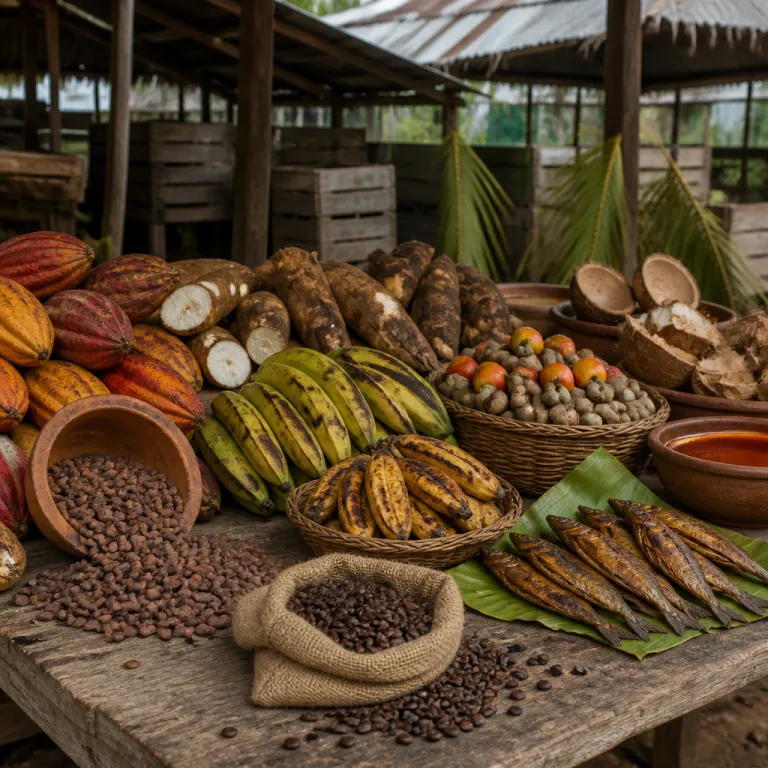
Resort kitchens still play a central role in any conversation about where to eat on Príncipe Island, especially if you are staying at Sundy Praia, Roça Sundy or Belo Monte. These properties sit inside a UNESCO designated biosphere reserve, and their chefs work closely with agroforestry teams to source fruits, vegetables and herbs from plantations that lie literally behind the rooms. When you eat a green salad or a cacao dessert at Roça Sundy, you are tasting produce grown in the same soil that once fuelled the colonial economy of São Tomé and Príncipe.
Sundy Praia’s restaurant has become the flagship for this approach, serving green pepper gazpacho, falafel style amuse bouches and moqueca fish stew prepared with local micocó herbs. The menu reads like a dialogue between African coastal cooking, Portuguese technique and global influences from places such as South America and the Middle East. Belo Monte, overlooking Banana Beach on the north of the island Príncipe, leans into similar ideas, pairing grilled fish and other dishes with fresh juices and carefully sourced coffee that reflect both local terroir and international expectations.
What distinguishes these hotel restaurants from many coastal resorts in Africa or island properties closer to Equatorial Guinea is the depth of their farm to table commitment. The Príncipe Collection hotels do not simply buy local food and drink ; they manage agroforestry projects that restore degraded land while supplying their kitchens with cacao, fruit and vegetables. That means every dish, from a simple fish stew seasoned with salt and pepper to a complex tasting menu, carries a direct link between the biosphere reserve and your plate, even if you never leave the resort for dinner in Santo António.
Why eating locally in Santo António matters for Príncipe’s future
Choosing where to eat on Príncipe Island is not just a question of taste ; it is a decision about how your travel budget flows through a fragile island economy. When you dine only at Sundy Praia, Roça Sundy or Belo Monte, most of your spending stays within a single corporate ecosystem, even if those hotels employ many local staff. By contrast, a night that moves from coffee on the square to grilled fish at Petisqueira Cantinho Alegre and dessert at Restaurante Romar spreads your impact across several family run businesses in Santo António.
São Tomé and Príncipe sits in a delicate position between Africa and the wider world, with limited flights and a small population that depends heavily on imported goods. Supporting local restaurants on the island São Tomé and the island Príncipe helps maintain skills, preserves recipes and keeps cash circulating in neighbourhoods that do not see the room rates paid by guests from the United States or Europe. It also encourages younger generations in Santo António to view hospitality as a viable career, whether they are cooking traditional African dishes, Portuguese influenced plates or new fusions that reflect their own travel dreams.
For travellers, the reward is a richer sense of place that no resort, however polished, can fully replicate. You taste how palm oil, salt and pepper, grilled fish and slow cooked beans shift from one kitchen to another, and how the same ingredients appear in both humble daily dishes and elevated hotel plates. As one local summary of the town’s dining scene puts it, “Grilled fish, octopus with boiled banana, and Feijoada.” are the must try dishes in Santo António, and making time for them in multiple settings is the surest way to understand what eating on this small island really means.
FAQ
Where should I eat in Santo António if I am staying at Sundy Praia or Roça Sundy?
If you are based at Sundy Praia or Roça Sundy, plan at least one lunch at Complexo Beira Mar for fish and octopus, and one dinner at Dona Antónia’s for coconut rice, obobo and plantain chips. Add a visit to Petisqueira Cantinho Alegre or Restaurante Bar Passó for grilled fish on the waterfront. Finish with ice cream at Restaurante Romar to see a different side of Príncipe’s food culture.
Do I need reservations for local restaurants in Santo António?
Reservations are strongly recommended, especially in the evening and for larger groups. Some places, such as Rosa Pão, work almost entirely on advance ordering, while others like Dona Antónia’s and Mini Restaurante Bar Cantinho Barreto can fill quickly when hotel guests come to town. Calling ahead also helps the kitchen plan ingredients on an island where supply can be unpredictable.
Can I pay by card in Santo António’s restaurants?
Many restaurants in Santo António prefer cash, and card terminals are not always reliable. You should carry enough local currency, the dobra, for your planned meals and taxis, especially at lunchtime when banks may be closed. This is particularly important if you are coming from hotels where room charge is the norm.
What are the must try local dishes on Príncipe Island?
On Príncipe Island, focus on grilled fish, octopus with boiled banana, feijoada and different versions of obobo, the rich stew that often uses palm oil and local spices. You will find these dishes in simple restaurants in Santo António and in refined forms at Sundy Praia, Roça Sundy and Belo Monte. Tasting them in both settings shows how São Tomé and Príncipe’s cuisine bridges home cooking and high end dining.
How does eating locally support Príncipe’s economy and environment?
Spending on meals in Santo António sends money directly to family run businesses, staff and small suppliers who live on the island year round. It complements the sustainability work of hotel groups such as Príncipe Collection, whose agroforestry projects supply farm to table ingredients to their kitchens. Together, local dining and responsible hotel operations help maintain both community livelihoods and the health of the biosphere reserve.