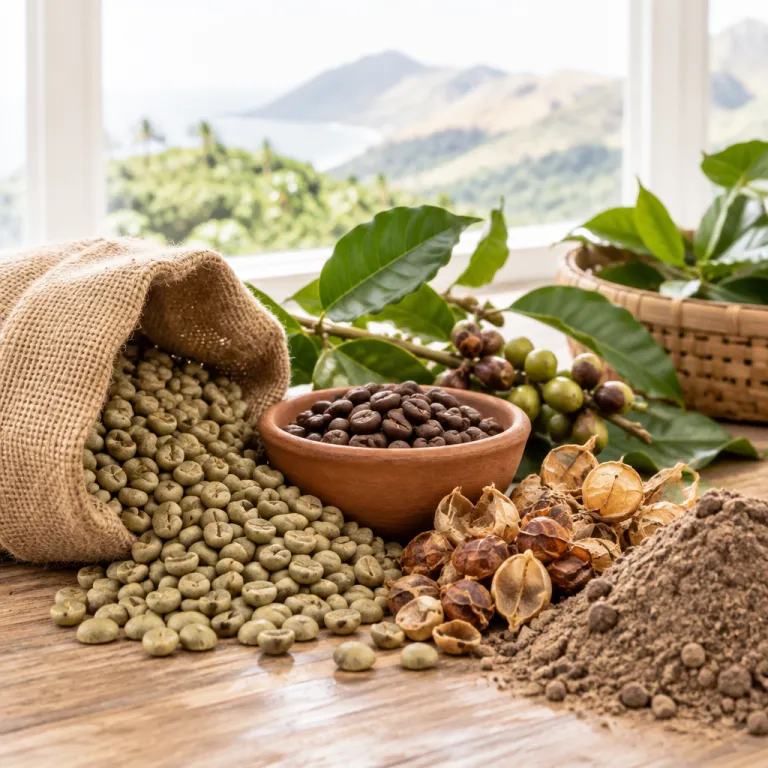
Monte Café in the central highlands: where altitude shaped the bean
Monte Café sits high in São Tomé’s central highlands, where cool air and cloud once dictated every decision about coffee cultivation. The monte slopes above the capital city gave this former coffee plantation a rare mix of altitude, mist and volcanic soil that still defines the landscape for travellers who come to explore it today. On an island better known for cocoa, this elevated corner of São Tomé quietly tells the parallel story of coffee production and how it shaped both the roça buildings and the surrounding forest.
The hills around the estate rise to roughly 700 metres above sea level, and that height made Monte Café an ideal site for careful cultivation and processing of arabica beans. When you travel up from São Tomé town, the road climbs through small hamlets and patches of forest that hint at the old plantation grid, then opens onto the colonial core of Roça Monte Café with its drying terraces and long, linear warehouses. This is the heart of the historic São Tomé coffee estate experience, where you can walk between rusted pulping machines and mossed stone, and still sense how the central highlands climate once dictated every harvest rhythm.
Monte Café is part of a group of historic roças that São Tomé and Príncipe has proposed for UNESCO World Heritage recognition as a cultural landscape, a process that highlights the estate alongside the island’s most important plantation sites. The nomination underlines how the archipelago used altitude, cloud and volcanic slopes to build a plantation economy that went beyond cocoa, and it gives travellers a clear reason to include Monte Café in any São Tomé discovery itinerary. For luxury guests staying on São Tomé island or continuing to Príncipe island, this highland stop offers a textured counterpoint to the beach resorts and a rare chance to see how coffee production once anchored life far from the coast.
The drive from São Tomé town: from coastal capital to colonial roça
Leaving São Tomé town for Monte Café, you trade sea breeze for mountain mist in less than an hour. The road threads inland past the small settlement of Trindade, then begins to climb steadily, with views back to the bay that remind you how compact this island really is. As you travel higher into the central highlands, the air cools, the forest thickens and the first colonial structures of Roça Monte Café appear between banana trees and old shade species once planted for coffee.
For couples staying in premium hotels in São Tomé, a private car with a driver is the most comfortable way to reach this attraction and save time on a busy itinerary. The route passes local fruit stalls and small cafés where you can pause for a short coffee tasting moment, sampling strong São Tomé brews alongside simple pastries before continuing to the main plantation. Many luxury travellers pair the drive with a stop at the Claudio Corallo chocolate factory in the capital, using an in-depth chocolate factory guide to understand how cocoa and coffee now coexist in São Tomé’s gourmet story.
Arriving at Monte Café, you enter through a broad square framed by colonial warehouses, the old hospital and the administrative house that once controlled the entire coffee plantation. The Museu do Café, a small but focused museum, occupies part of this complex and offers context on coffee cultivation and processing, from seedling to export sack, with original machinery still in place. For guests who appreciate architecture, the contrast between the fading grandeur of the roça buildings and the lush monte backdrop makes this one of the top inland attractions on São Tomé island.
Inside Monte Café: from museu café to working terraces
Stepping into the Museu do Café at Monte Café, you move from bright courtyard light into cool, shadowed rooms lined with old equipment. Here the story of coffee production on São Tomé island unfolds through photographs, tools and the hulking iron pulpers that once processed beans from the surrounding slopes. Panels explain how the central highlands climate allowed careful cultivation and slow drying, with diagrams that show each stage from cherry to green coffee ready for export.
Outside, the drying terraces of the historic São Tomé coffee plantation stretch along the hillside, their stone surfaces now used in smaller scale by local producers who are reviving coffee on the estate. You can walk these platforms on guided tours, hearing how workers once raked beans under the sun while clouds rolled in from the national park ridges above, and how cocoa never fully replaced coffee in this particular monte. For travellers who have already read about the bean routes in a Monte Café to Diogo Vaz bean trail feature, the visit connects abstract history with the physical feel of stone, rust and altitude air.
One of the most atmospheric corners of the roça is the former administrative block, where windows frame views towards São Nicolau and other small communities that once supplied labour to the plantation. From here you can see how the monte slopes fall away towards São Tomé town, and how the central highlands form a natural barrier between coast and interior. A local guide once summed it up simply: “From this balcony you understand why everything on the island used to pass through a roça.” Luxury travellers often comment that this vantage point, more than any beach, helps them understand why São Tomé and Príncipe developed such distinct roça cultures on different parts of the island.
Coffee versus cocoa: two crops, two roça atmospheres
On São Tomé island, cocoa usually takes the spotlight, yet Monte Café shows how coffee created a different kind of plantation atmosphere. Cocoa thrives closer to sea level in heavier heat, while coffee needed the cooler monte air and cloud cover of the central highlands to reach its best expression. Walking the coffee plantation at Monte Café, you feel this difference immediately in the temperature, the filtered light and the way the forest presses close to the colonial buildings.
Many travellers arrive having already visited coastal roças focused on cocoa, where fermentation boxes and drying racks sit under stronger sun and the scent is rich, almost tropical. At Monte Café, the smell is sharper and more herbal, with notes of wet stone and leaf mould that speak of altitude and the nearby national park ridges that feed the local microclimate. This contrast makes the highland coffee estate an essential counterpoint for anyone serious about understanding how São Tomé and Príncipe balanced its two main export crops.
For luxury guests, the most rewarding way to explore both sides of this story is to combine a Monte Café visit with a curated cocoa tasting, perhaps featuring bars from Claudio Corallo or other high-end producers. Some guided tours now weave together coffee and cocoa stops, allowing you to compare beans, terroirs and processing methods in a single day while still returning to your hotel in São Tomé town by evening. This dual focus turns a simple inland excursion into one of the top agritourism experiences on the island, especially for couples who value depth, flavour and a sense of place over simple beach time.
The new life of São Tomé coffee: from revival plots to hotel cups
While Monte Café no longer operates at the industrial scale of its colonial peak, a quiet revival of São Tomé coffee is underway on the estate. Small local producers are replanting sections of the monte slopes, focusing on quality rather than volume and using the old infrastructure of the coffee plantation as a framework for modern cultivation and processing. Visitors walking the terraces today may see young coffee trees alongside ageing equipment, a visual reminder that the bean is not just a museum piece but a living crop returning to the central highlands.
For travellers, this revival has two tangible benefits, both of which intersect with the luxury hotel scene on São Tomé and Príncipe. First, more properties on São Tomé island are now serving coffee sourced from Monte Café or neighbouring highland plots, turning the morning cup into a direct link with the landscape you explored the day before. Second, carefully packaged beans from the historic São Tomé coffee estate are becoming one of the best souvenirs to save space for in your luggage, a practical way to extend the trip once you return home.
Couples who care about provenance should ask their hotel concierge or private guide about where to buy freshly roasted Monte Café beans, ideally from outlets that work directly with local growers. One small producer described the difference simply: “The same altitude that gives us mist also gives the coffee its brightness in the cup.” Some guided tours include a stop at boutique roasteries in São Tomé town, where you can taste different roast levels and learn how altitude, shade and soil composition in the central highlands influence flavour. This is where the story of São Tomé and Príncipe’s coffee production moves from history lesson to daily ritual, one cup at a time.
Pairing Monte Café with highland scenery and Príncipe escapes
A visit to Monte Café rarely stands alone; it anchors a wider exploration of São Tomé’s interior landscapes. From the roça square, it is a short drive towards the edges of the national park, where trails lead into dense forest alive with bird calls and the occasional glimpse of a waterfall cutting through the monte. Couples staying at luxury properties often arrange guided tours that combine the coffee plantation with light hiking, allowing them to experience both cultural heritage and raw nature in a single, carefully paced day.
For travellers planning a longer São Tomé and Príncipe itinerary, Monte Café works beautifully as an inland counterpoint before flying on to the quieter island of Príncipe. There, high-end lodges such as those near Príncipe’s forested interior or along the wild coast offer a different expression of Gulf of Guinea luxury, one that leans into biodiversity and empty beaches rather than colonial architecture. Reading about the five a.m. birdwatching walks in a dedicated birdwatching-as-luxury guide can help you decide how to balance coffee, forest and shoreline across both islands.
Back on São Tomé, some of the most rewarding itineraries link Monte Café with other small roças such as São Nicolau or Zóchi, creating a loop that reveals how varied plantation life once was across the island. Each stop adds another layer to the story of São Tomé and Príncipe, from the highland coffee estate in the central mountains to coastal estates now reimagined as intimate retreats. For couples who value narrative as much as comfort, this roça-to-table arc turns a simple island break into a textured journey through history, flavour and landscape.
FAQ
How long do I need to visit Monte Café from São Tomé town?
Most travellers should allow a half day to visit Monte Café from São Tomé town, including the drive into the central highlands. This gives enough time to tour the Museu do Café, walk the old coffee plantation terraces and pause for a tasting without rushing. Couples who want to add a short forest walk or another roça stop nearby may prefer to dedicate a full day.
Is Monte Café suitable for a luxury focused itinerary?
Monte Café fits naturally into a luxury itinerary because it pairs well with premium hotels on São Tomé island and Príncipe. You can travel in comfort by private car, arrange private guided tours of the plantation and return to high-end properties that serve coffee sourced from the same highlands. The contrast between refined hotel service and the raw, atmospheric roça setting is part of the appeal.
Can I buy Monte Café coffee to take home?
Yes, visitors can usually buy Monte Café beans either at the plantation itself or through selected shops and roasteries in São Tomé town. Look for clearly labelled packets that specify Monte Café or central highlands origin, and ask about roast date to ensure freshness. Many luxury hotels can advise on the best outlets and may even stock small batches for guests.
Do I need a guide to visit Monte Café and the surrounding area?
A guide is not mandatory, but it significantly enriches the experience at Monte Café and in the nearby highlands. Guided tours provide context on coffee cultivation, colonial history and current revival efforts that you would otherwise miss. For couples on a short stay, a private guide also helps optimise time and link Monte Café with other key attractions.
How does Monte Café compare with cocoa focused roças on São Tomé?
Monte Café offers a cooler, mistier atmosphere than most cocoa focused roças, reflecting its altitude and coffee specialisation. The machinery, Museu do Café displays and terrace layout all centre on coffee production rather than cocoa fermentation and drying. Visiting both types of roça gives a fuller picture of how São Tomé and Príncipe built its plantation economy on two very different beans.