Why sao tome stargazing equator dark sky feels different
On São Tomé and Príncipe, the first thing you notice at night is the sheer weight of the sky. The islands sit almost exactly on the equator at roughly 0°N to 1.7°N, far from any desert highway or mainland city, so the stars arrive early and stay sharp in every direction. With almost no light pollution beyond a few fishing pirogues and village lamps, the night sky becomes a dome of dark velvet where each star looks close enough to touch.
For couples used to the best stargazing in the United States or a trip to an International Dark Sky Park, the surprise here is how intimate everything feels. You are not in a national park with a visitor center or a national monument with a parking lot; you are on a small island beach, barefoot in the sand, watching the southern hemisphere and northern constellations share the same skies. That equatorial position means the Southern Cross rises above the palms while familiar northern stars hover behind you, a rare double view that even the famed Atacama Desert cannot offer from one fixed point.
Luxury properties on both islands understand that these equatorial dark skies are part of the promise. Many will dim pathway lights after dinner, letting the darkness reclaim the resort and turning every terrace into a private sky deck. You will not need a complex sky map or astronomy app; a simple star walk from your suite to the shore is enough to feel the moon, the tides, and the slow shift of the moon phases working over the Gulf of Guinea.
Roça Sundy and the eclipse that proved Einstein right
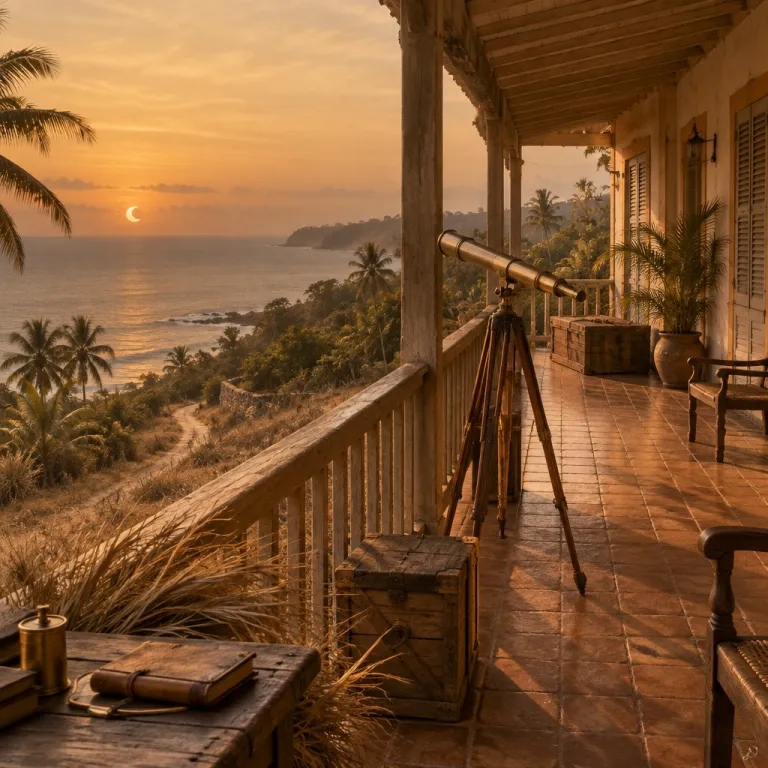
On Príncipe, Roça Sundy is where astronomy, hospitality, and history share the same courtyard. In May 1919, Arthur Eddington’s eclipse expedition set up telescopes here to photograph the Sun’s corona and measure how starlight bent around it, producing the data that confirmed Einstein’s General Theory of Relativity. Standing on the same terrace today, you look from the restored plantation house to the sky and feel how a quiet island night once shifted the way we understand gravity.
The roça has been carefully reimagined as a refined retreat, and its rooms open onto lawns where the night skies still fall dark and clear. After dinner, couples often walk out past the old cacao dryers, letting their eyes adjust until the stars appear in layers, first the brightest star near the moon, then the softer spray of the Milky Way. There is no need for a sophisticated sky map or a star walk app; the staff will simply point where the Southern Cross climbs, and you follow their gesture into the dark sky above the forested hills.
Link your stay here with a slow morning in Santo António, Príncipe’s pocket sized capital, using a market to waterfront stroll as a gentle counterpoint to the sao tome stargazing equator dark sky experience. By day, the national road curls past roças and jungle; by night, the same route feels like a corridor into space as clear skies open above the islands. This is not the managed darkness of an International Dark Sky Park or a national park in the United States, but a lived, leve leve rhythm where meteor showers, a passing meteor streak, and the slow drift of moon phases are simply part of the evening.
Equator lines, island nights and where to stay
Ilhéu das Rolas, just off the southern tip of São Tomé, turns the equator into a tangible line. By day, you walk to the simple monument that marks zero latitude at approximately 0°00′N, 6°32′E, watching the ocean split north and south while the sun tracks almost directly overhead. By night, the same spot becomes one of the best stargazing platforms in West Africa, with the night sky stretching evenly to both horizons and the stars of each hemisphere sharing the same dark skies.
High end lodges on this small island lean into the sao tome stargazing equator dark sky narrative with low slung architecture and minimal exterior lighting. From a clifftop deck you will see the moon rise over the Atlantic, then fade as the sky darkens and the Southern Cross tilts higher, while a few northern constellations linger behind you. Couples often bring a simple sky map printed by the hotel or a basic app that tracks moon phases, using it as a quiet guide while they lie back on loungers and let the night skies unfold.
On São Tomé itself, altitude properties such as Monte Café pair coffee heritage with elevated views that suit slow astronomy. A stay near this highland area, framed by the altitude coffee comeback, gives you cooler air, clearer skies, and a sweeping view over the island’s south coast. It is not the bone dry clarity of the Atacama Desert or the vast openness of the Atacama Desert national park region, but on a clear night you will still see meteor showers arc above the forest and a bright star fall briefly like a private meteor meant only for two.
How luxury hotels frame the night sky experience
São Tomé and Príncipe’s most polished properties treat sao tome stargazing equator dark sky as a core part of their identity, not a side activity. Instead of building massive pool complexes, many invest in wide verandas, ocean facing daybeds, and hammocks placed precisely for an uninterrupted view of the sky. The result is a style of stargazing where you move from dinner to lounger in a single unhurried walk, cocktail in hand, as the stars quietly take over the ceiling.
On Príncipe, several lodges sit within or beside protected forest that functions like an informal national park, keeping light pollution low and preserving the integrity of the night skies. Staff will often time private dinners with key moon phases, suggesting a later seating when the moon sets early and the dark sky returns in full. Some properties offer printed sky map cards or host short talks that compare their skies with famous places such as the Atacama Desert or an International Dark Sky Park in the United States, underlining why this small archipelago in the southern hemisphere offers such a rare, double hemisphere view.
On São Tomé, restored roças and coastal retreats highlighted in our UNESCO roça restoration feature often keep lighting deliberately soft. You will notice shaded lanterns instead of floodlights, and paths that fade gently into the dark rather than slicing through it. This careful design lets couples watch meteor showers from their terrace, follow a single star across the night sky, and feel that the islands themselves are an open air sky park shaped for romance rather than for scientific observation.
Planning your own sao tome stargazing equator dark sky escape
For couples planning a trip, timing and rhythm matter more than equipment. Aim for the drier season months from June to September, when clear skies are more frequent, and ask your hotel which moon phases bring the darkest nights for stargazing. You will not need a telescope; a simple star walk along the beach, a basic app that shows the Southern Cross and major stars, and a willingness to sit still in the dark are enough.
Think of the islands as a natural sky map where each location offers a different frame. Roça Sundy gives you scientific heritage and enclosed night skies framed by forest, while Ilhéu das Rolas offers a horizon to horizon view that feels almost like standing in a gentle ocean desert. Inland, higher ground near Monte Café and other upland roças behaves like a compact national park, with cooler air, fewer insects, and some of the best stargazing conditions on São Tomé when the night sky clears after a shower.
Pack light, neutral clothing for evening walks, and speak with your hotel about turning off terrace lights during key meteor showers. Many properties will happily adjust, understanding that the real luxury here is not another amenity but the ability to watch a meteor shower cross the night skies in near silence. In a world where many dark skies require a drive to a formal national monument or a certified International Dark Sky Park, São Tomé and Príncipe offer something quieter: an equatorial island life where the sky, the stars, and the slow roll of time are simply part of the stay.
FAQ
Why is stargazing on São Tomé and Príncipe so special for couples ?
The islands sit almost exactly on the equator, so you can see constellations from both the northern and southern hemisphere in a single night. Low levels of light pollution create naturally dark skies, which means the night sky appears rich with stars even without equipment. For couples, this combination of intimacy, quiet beaches, and sao tome stargazing equator dark sky conditions turns a simple evening into a shared, memorable ritual.
Do I need an astronomy app or telescope to enjoy the night sky there ?
You do not need a telescope to appreciate the stars on these islands. A basic sky map or a simple app that shows major constellations, the Southern Cross, and moon phases can enhance the experience, but the naked eye view is already impressive. Most luxury hotels are used to guests interested in the sky and will happily point out key stars or suggest the best stargazing spots on their property.
Where are the best places to stay for dark sky views ?
On Príncipe, Roça Sundy offers a powerful blend of history and dark sky access, with lawns and terraces that open directly to the night skies. Coastal lodges on Ilhéu das Rolas provide wide horizon views and some of the best stargazing for couples who want the equator line by day and a clear night sky by evening. On São Tomé, upland roças and refined coastal retreats with minimal exterior lighting give you quieter, more private perspectives on the stars.
How does São Tomé compare with famous stargazing destinations like the Atacama Desert or United States national parks ?
The Atacama Desert and major United States national park observatories offer extremely dry air and large scale infrastructure, which are ideal for scientific astronomy. São Tomé and Príncipe cannot match that level of equipment, but they excel in intimacy, romance, and the rare ability to see both hemispheres’ skies from one beach. For many travelers, the combination of equatorial position, dark skies, and luxury hospitality makes the sao tome stargazing equator dark sky experience feel more personal and less technical.
When is the best time of year to see meteor showers and clear skies ?
Meteor showers are visible at different times of the year, and your hotel can advise which events align with your travel dates. In general, drier months bring more consistent clear skies, which improves both meteor shower visibility and overall stargazing. For the darkest nights, ask properties to recommend stays around new moon phases, when the moon is absent and the stars and night skies appear at their brightest.
Sources
Príncipe Collection; International Dark Sky Association; European Southern Observatory; historical records of the 29 May 1919 total solar eclipse at Roça Sundy; geographic surveys of Ilhéu das Rolas equator monument coordinates.