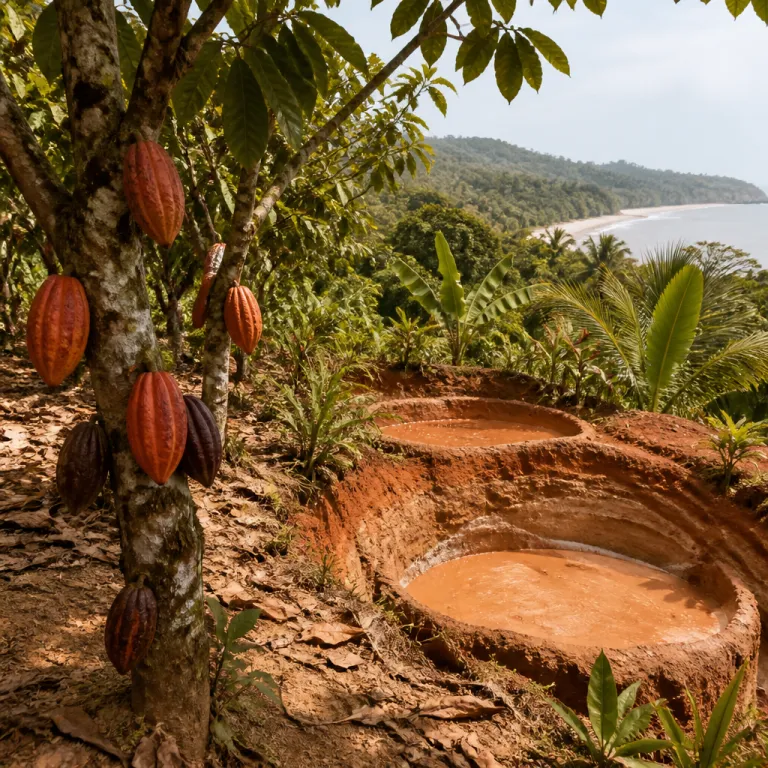
Why São Tomé’s spa wellness scene starts in the cocoa groves
On São Tomé, spa wellness is not an imported script but an agricultural story written in cocoa groves and volcanic hills. The idea of a São Tomé spa rooted in natural ingredients and cocoa only fully lands when you stand between the trees and realise that the same cocoa pods feeding the chocolate industry are also feeding the treatment menu. Guests who care about mind body balance quickly see that the islands’ wellness philosophy is rooted in soil, not slogans.
Cocoa has shaped São Tomé’s economy for generations, and recent trade data from the World Bank and UN Comtrade indicate that cocoa beans and cocoa products still account for roughly half of export earnings.1 That same cocoa, grown in rich volcanic soil under agroforestry shade, now appears as cocoa butter in massage oils, as finely milled powder in body wraps, and as high quality nibs in spa café desserts. When hotels and resorts talk about using organic products here, they are usually referring to beans sourced from cooperatives such as CECAQ 11, which supports just over one thousand small farmers in the south of the main island according to cooperative reports.2
For couples choosing where to stay, this agricultural backbone matters because it shapes every spa service on offer. A São Tomé cocoa spa experience built on local botanicals often starts with a welcome ritual using herbal teas made from island leaves, followed by a therapist explaining exactly which plantation supplied the cocoa butter for your full treatment. As one therapist at a plantation-adjacent resort put it, “If I can tell you the farmer’s name, you relax differently.” That level of traceability, combined with fair trade partnerships and traditional farming methods, creates an environment relaxation that feels both ethical and indulgent.
Cocoa butter, banana leaves, and volcanic clay on the treatment menu
The ingredient list in São Tomé’s best spa wellness spaces reads like a map of the islands’ farms and forests. At Sundy Praia on Príncipe, therapists use locally sourced cocoa butter for slow, warm massages, then wrap the body in banana leaves that act as a natural heat blanket and help the skin absorb every drop of oil. This is São Tomé spa culture built on natural cocoa-based wellness in its purest form, where the treatment menu mirrors what grows just beyond the villas and along the old plantation tracks.
Volcanic clay, lifted carefully from mineral rich soils, appears as a detoxifying mask for both face and body, tightening the skin while easing muscles tired from jungle hikes. Coffee bean massages use beans from surrounding plantations, ground to a gentle powder that exfoliates without scratching and floods the senses with a roasted aroma. Couples can review each treatment option in a detailed spa booklet, often presented with clear menu pages that explain the origin of every ingredient and how it supports mind body alignment.
Banana leaf body wraps have become a signature of the islands’ terroir based wellness, and you can read more about these equatorial rituals in this guide to banana leaf body wraps in Príncipe. Many hotels and resorts now allow guests to book treatment combinations that pair cocoa butter massages with volcanic clay masks for a full treatment arc from exfoliation to deep hydration. The result is a body spirit reset that feels tailored to the equatorial climate, with organic products doing the heavy lifting while you simply breathe and enjoy the ocean view.
From plantation to massage table: Sundy Praia’s farm to spa pipeline
On Príncipe’s northwestern shore, Sundy Praia has turned the idea of São Tomé spa wellness based on natural cocoa ingredients into a precise operating model. The resort sits close to former plantations where cocoa, coffee, and tropical botanicals still grow under agroforestry canopies, and the spa team works directly with local producers to secure high quality ingredients. Traditional farming, solar dryers, and fermentation boxes used by partners such as Satocao and Santomé Beans ensure that cocoa butter and powder arrive at the spa with both flavour and integrity intact.3
In practice, this means your cocoa butter massage is not just a generic chocolate themed treatment but a direct extension of the island’s agricultural production. Therapists explain how cocoa was introduced to São Tomé in the nineteenth century, how cooperatives now use fair trade practices, and why volcanic soil gives the beans such depth. When you book treatment packages here, the treatment menu often includes a short explanation of which cooperative supplied the cocoa, turning a simple body scrub into a quiet lesson in local history.
Between sessions, couples drift to the resort’s café to sample desserts made with the same beans, creating a subtle bridge between spa wellness and gastronomy. A wide selection of herbal teas, fresh juices, and non alcoholic beverages is available, while beer and wine are allowed in moderation for guests who want a sunset drink after their full treatment. For a deeper dive into the island’s cacao culture, pair your stay with a visit to Claudio Corallo’s factory, detailed in this insider guide to São Tomé’s most talked about chocolate experience, then return to Sundy Praia’s spa to feel how the same beans translate from bar to body.
Bom Bom’s jungle spa: canopy, ocean, and environment relaxation
While Sundy Praia leans into plantation proximity, Bom Bom offers a different angle on São Tomé’s cocoa-centred spa scene. The property sits between two beaches on a forested islet off Príncipe, and its spa is tucked into the jungle where waves and birdsong replace background music. Here, environment relaxation is not a design concept but the literal soundscape of your massage table.
Treatments still use cocoa butter, volcanic clay, and organic products, but the emphasis shifts from farm narratives to sensory immersion. Therapists might start with a light foot ritual using volcanic sand, then move into a body massage that layers cocoa oil with essential oils distilled from local botanicals. Couples can request a view treatment setup where massage beds are angled toward the water, allowing the mind body connection to deepen as the tide moves in and out.
Between sessions, guests wander to the small café pavilion to enjoy a simple food and drinks selection, from fresh coconut water to chilled beer brewed on the mainland. Herbal teas made with island leaves support digestion after richer meals, while a wide selection of fruit juices keeps hydration levels high in the equatorial heat. For those planning a multi stop itinerary, our overview of São Tomé spa and wellness resorts helps you decide whether Bom Bom’s jungle setting or a plantation adjacent retreat better suits your body spirit priorities.
How terroir based wellness shapes what you drink, eat, and feel
São Tomé’s wellness culture extends beyond the massage room into what you sip, snack on, and smell throughout the day. Many hotels and resorts curate a wide selection of beverages that echo the same agricultural story as their spa products, from single origin hot chocolate to coffee grown within a few kilometres. Herbal teas made with lemongrass, ginger, and local leaves support digestion and circulation, aligning with treatment menu goals of harmonising mind body rhythms.
In some properties, the café becomes an extension of the spa, with a light food menu designed to complement full treatment programmes. You might enjoy a salad dressed with cocoa nibs after a detoxifying volcanic clay wrap, or pair a small glass of local beer with a plate of grilled fish while watching the light shift over the ocean. Hops and malt may not be grown on the islands at scale, but the way beer is served here still respects the same principles of moderation and respect for the body spirit balance.
For couples who value transparency, staff are usually happy to explain which organic products are used in both kitchen and spa, and which items carry fair trade certification. Some resorts even provide a printed menu book that lists suppliers alongside each spa service and café dish, allowing guests to view treatment options and food choices through the same ethical lens. This integrated approach reinforces the core promise of São Tomé spa experiences based on natural cocoa and volcanic ingredients, where every sensory touchpoint, from chocolate desserts to volcanic clay masks, is anchored in the islands’ own terroir.
Planning your stay: from plantation visits to steam rooms and cocoa rituals
Designing a wellness focused itinerary in São Tomé means thinking in layers rather than ticking off isolated spa appointments. Start with a visit to a working cocoa plantation, where you can walk among trees, see fermentation boxes in use, and understand how cooperatives such as CECAQ 11 and companies like Satocao and Santomé Beans keep the industry both sustainable and profitable.4 “What is the main export of São Tomé?” and “When was cocoa introduced to São Tomé?” are not abstract questions here; they are part of the story your therapist will reference later in the steam room.
Back at your hotel, alternate active days with slower ones that focus on spa wellness rituals. A typical sequence might include a steam room session to open pores, a body scrub using cocoa powder and volcanic sand, then a massage with warm cocoa butter to seal in moisture. Couples can book treatment packages that combine these elements into a full treatment arc, often capped with a light snack and herbal teas in a quiet lounge with a sea facing view.
Most luxury hotels and resorts on the islands maintain a clear policy on what is allowed in wellness areas, keeping noise and alcohol to a minimum to protect the environment relaxation. When you review the treatment menu or browse the spa overview online before booking, pay attention to how clearly each property explains its use of organic products and fair trade sourcing. The more specific the information about cocoa, volcanic clay, and botanicals, the more confident you can feel that your São Tomé spa journey built on natural ingredients and cocoa will honour both your body spirit and the communities who cultivate these ingredients.
Key figures behind São Tomé’s cocoa and wellness connection
- Cocoa represents close to half of São Tomé’s total exports in recent years, so every cocoa butter massage or chocolate based treatment directly reflects the islands’ primary agricultural strength (source: World Bank and UN Comtrade data).1
- Certified cocoa production has reached more than one thousand tons in recent reporting, out of a total output of over three thousand tons, showing how quickly farmers are adopting organic and fair trade practices that feed into spa product supply chains (source: sector certification reports and cooperative statistics).4
- The cooperative CECAQ 11 supports around 1,135 small scale cocoa farmers in southern São Tomé, creating a stable base of producers whose beans can be transformed into high quality spa ingredients as well as chocolate (source: cooperative documentation and project summaries).2
- Agroforestry and organic cultivation methods, combined with hand tools, solar dryers, and fermentation boxes, reduce environmental impact while preserving the complex aromas that make cocoa powder and butter so effective in sensory treatments (source: agricultural extension programmes and NGO reports).3
- Year round equatorial conditions near 0.18° N and 6.61° E allow continuous cultivation of cocoa and botanicals, giving hotels and resorts a reliable supply of fresh organic products for spa wellness menus without relying on long distance imports (source: geographic and climate records).1
FAQ : São Tomé spa and cocoa wellness
Can I visit a cocoa plantation and then book a related spa treatment ?
Yes, many travellers combine plantation tours with cocoa based spa rituals on the same trip. You can visit farms that supply cooperatives such as CECAQ 11, then stay at hotels and resorts where cocoa butter and powder from similar beans appear in massages and body wraps. It creates a coherent São Tomé spa experience based on natural ingredients and cocoa, running from field to treatment room.
What makes São Tomé’s spa ingredients different from other destinations ?
The islands grow cocoa, volcanic clay, and equatorial botanicals in rich volcanic soil, so spas can work with fresh, minimally processed organic products. Cocoa has been central to the economy since the nineteenth century, and today a significant share of production is certified under fair trade or organic schemes. That agricultural depth gives local spa wellness menus a level of traceability and terroir rarely matched elsewhere.
Are São Tomé’s spas suitable for couples seeking a romantic retreat ?
Couples will find several luxury properties with private treatment rooms, steam room access, and tailored full treatment packages. Settings range from Sundy Praia’s plantation adjacent suites to Bom Bom’s jungle framed pavilions, each offering a different balance of view treatment options and environment relaxation. Most resorts also provide quiet cafés and lounges where you can enjoy herbal teas, chocolate desserts, or a light beer after your sessions.
How sustainable are the spa products used in São Tomé ?
Many spas source cocoa and botanicals from cooperatives and companies that follow organic cultivation and fair trade practices. Farmers use a mix of traditional methods and modern tools such as solar dryers and fermentation boxes to protect both quality and biodiversity. When you review a treatment menu or menu book, look for clear references to local sourcing, organic products, and partnerships with named producers.
Is alcohol allowed in São Tomé’s wellness focused hotels ?
Alcohol is generally allowed in moderation, but policies vary by property and by specific spa area. Most hotels and resorts serve a wide selection of beverages, including beer, wine, and cocktails, alongside herbal teas and fresh juices. Within spa zones, the focus stays on hydration and body spirit balance, so staff may encourage guests to choose light drinks before or after treatments rather than stronger options.
References
- World Bank and UN Comtrade data on São Tomé and Príncipe’s merchandise exports, including cocoa beans and cocoa preparations. ↩ ↩ ↩
- CECAQ 11 cooperative reports and project documentation detailing member numbers and farmer profiles in southern São Tomé. ↩ ↩
- Technical notes from Satocao, Santomé Beans, and partner NGOs describing agroforestry systems, solar drying, and fermentation practices for cocoa. ↩ ↩
- Certification audits and sector studies on São Tomé’s organic and fair trade cocoa volumes, including total and certified tonnages. ↩ ↩