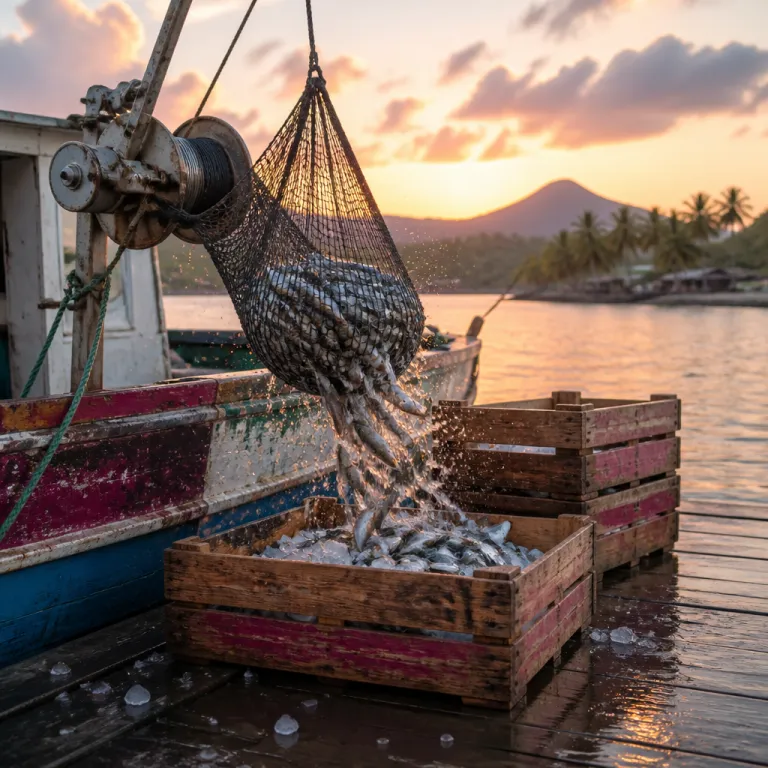
The daily catch that shapes São Tomé’s luxury tables
On São Tomé’s waterfront, the day’s menu starts long before breakfast. Local fishermen push wooden boats through the surf at first light, working traditional nets and hand lines that still anchor the seafood economy of this central African island nation. By late morning, their fish and shellfish landings quietly dictate what appears on both hotel menus and in small seafood restaurants across the city.
The species shift with the seasons, yet the rhythm stays constant for locals and visitors who care about where they eat and drink. From roughly November to April, the main tuna season brings larger yellowfin and bigeye, while wahoo and smaller coastal fish appear year round. Octopus and squid arrive from deeper waters that stretch towards Equatorial Guinea and the wider Gulf of Guinea. This steady flow of fresh catch sustains São Tomé’s cuisine and supports thousands of livelihoods in coastal communities, a reality that underpins every grilled fish you see leaving a hotel kitchen.
Markets in São Tomé city and in smaller places on Príncipe become the crucial bridge between pier and plate. At the Mercado Municipal on Avenida da Independência in São Tomé city, for example, vendors stack silver fish on crushed ice while calling out prices to passing shoppers. Typical opening hours run from early morning until around midday, with peak activity between 7:00 and 10:00. “If the eyes are clear and the gills are bright, you know it came in this morning,” one stallholder might tell you as she lifts a tuna from a plastic tub. For travelers planning a food-focused stay, understanding this chain is the first step to choosing the best place to eat fresh fish, whether in a polished hotel dining room or at modest neighborhood eateries that locals rely on daily.
From market stalls to hotel menus in São Tomé city
Walk São Tomé city’s waterfront early and you see the hierarchy of freshness in motion. Local fishermen unload crates of glistening fish while market vendors negotiate prices that will later shape both humble food stalls and the most refined hotel restaurants the capital now offers. For travelers comparing luxury hotel options, this unseen choreography is what separates a generic grilled fillet from a plate that truly reflects São Tomé’s cuisine.
Head inland a short walk from Avenida das Nações Unidas and you reach markets where calulu ingredients sit beside whole tuna and smaller reef fish. Here, chefs from upscale properties quietly select the best seafood for evening service, while home cooks choose smaller pieces for family dishes that often combine chicken, vegetables, and smoked fish. Arriving before midday gives you the clearest view of what will appear later in local seafood restaurants and hotel dining rooms, and you can expect prices to be lower and variety higher earlier in the day.
Traditional preparations still dominate, even as some kitchens experiment with influences from the Middle East, South America, and the United States. You will see peixe assado — whole fish seasoned and grilled over open flames — alongside calulu, the slow stewed national dish that many hotel chefs now refine for guests. If you are wondering where to eat calulu in São Tomé, use local recommendations from market vendors, taxi drivers, and hotel staff, then match those suggestions with what you have just seen on the stalls to prioritize places that clearly cook with the day’s catch.
Príncipe’s ocean to table: roças, resorts, and remote piers
On Príncipe, the relationship between pier and plate feels even tighter. The island’s status as part of the “chocolate islands” — a nod to its cacao plantations and São Tomé and Príncipe’s cocoa heritage — means many luxury properties sit on former roças, yet their menus still lean heavily on the daily catch. Resorts near Santo António work closely with local fishermen, turning modest wooden boats into the quiet engine of their fine dining seafood programs.
Complexo Beira Mar in Santo António is often cited by guidebooks and recent traveler reviews as a benchmark for honest, well cooked fish and octopus, and it shows how simple dining rooms that visitors find on Príncipe can rival hotel kitchens. Fish arrives in the morning, is cleaned on site, then becomes grilled fish, octopus stews, or simple plates of fried fish served with rice and seasonal vegetables. Typical main courses here fall in the mid-range for the island, and travelers who plan their time around food will find that the best places to eat are often a short walk from the pier, where the catch is still being unloaded.
Luxury lodges such as those at Sundy Praia and Bom Bom typically source from the same fishing communities, but filter the ingredients through more elaborate techniques and wine pairings. A tasting menu might feature tuna crudo, then a main course of barracuda or grouper grilled over open flames, echoing the methods used in the villages. Families or couples interested in how cacao and seafood intersect on these islands can combine a plantation visit with coastal dining by joining curated excursions that include both a working cacao estate and a meal at a pier-side restaurant where the ocean still dictates the menu.
Where to eat: from hotel dining rooms to local favorites
Choosing where to eat in São Tomé and Príncipe is less about star ratings and more about proximity to the morning’s catch. In São Tomé city, Avenida das Nações Unidas and the streets just behind it host a mix of hotel restaurants, casual cafés, and small places where locals and visitors share tables. A thoughtful travel plan will always balance polished hotel dining with at least a few meals in small seafood restaurants that sit close to the docks.
Names matter when you start planning. Papa Figo, for example, is a long standing restaurant São Tomé residents recommend for grilled fish and hearty dishes that mix local cuisine with subtle Portuguese touches; recent online reviews consistently highlight its peixe assado and generous portions. Xico Café, by contrast, leans more towards café culture, yet still offers plates where fish, prawns, and simple burgers share space on the menu, making it a useful place for mixed groups where one person wants grilled fish while another orders chicken or lighter food.
Beyond the capital, small roadside eateries that travelers find along coastal routes often have no printed menu, only a verbal list of what came in that morning. These places rarely appear on international travel sites, yet they can deliver some of the best grilled fish on the islands, especially when you see the same species being unloaded a short walk away. For more structured, property specific recommendations that connect these local experiences with luxury stays, many specialist travel agencies now compile updated lists of premium dining experiences in São Tomé and Príncipe, which you can then cross reference with what you observe on the ground.
Practical guidance for couples planning seafood focused stays
For couples using a luxury hotel booking website, aligning your stay with São Tomé’s seafood rhythm turns a simple trip into a culinary journey. Start by choosing properties in São Tomé city or on Príncipe that sit close to working piers, not just pretty beaches, because this is where many local restaurants and hotel kitchens draw their strength. Ask directly how the hotel sources its fish and shellfish, and whether they buy from nearby fishermen or rely on imported supply chains.
When you arrive, use your first morning to walk the docks and nearby markets, whether in São Tomé city, Santo António on Príncipe, or smaller coastal places. Seeing which fish appear in quantity — tuna, smaller reef fish, octopus — helps you read menus more intelligently and choose dishes that reflect the day’s reality rather than a static list. If you are used to restaurant culture in the United States, the Middle East, or South America, this close link between pier and plate in a small central African island state like São Tomé and Príncipe can feel refreshingly direct.
Beyond fish, you will notice how local cuisine weaves in chicken, tropical vegetables, and occasional nods to global comfort food such as burgers, especially in casual cafés. Some hotel restaurants São Tomé visitors favor now offer tasting menus that pair seafood with cacao elements, echoing the chocolate islands identity while staying rooted in the ocean. To deepen your understanding of how these islands sit between Equatorial Guinea, regional mainland markets, and wider Atlantic trade routes, look for food tours that explain not only what you eat and drink, but also how travel, history, and geography shaped the dishes in front of you; local guides and official tourism offices can usually provide up to date options.
Reading the ocean: culture, identity, and what ends up on your plate
The ocean around São Tomé and Príncipe is more than a pantry; it is a cultural backbone. Fishing techniques, from hand lines to small nets cast from wooden boats, have changed little, even as hotel dining rooms have grown more polished. This continuity explains why simple seafood restaurants still feel closely tied to the same waters that supply the island’s most exclusive resorts.
Seafood tourism is growing, yet the core objectives remain local — to provide nutritious food, sustain fishing traditions, and support the island economy. A 2022 note from São Tomé and Príncipe’s Ministry of Agriculture, Fisheries and Rural Development, summarized in regional policy briefs, indicates that fisheries and related activities account for a significant share of coastal employment, especially around the capital and Santo António, though precise percentages vary by source and year. For travelers arriving from America or other long haul markets, this means your grilled fish or octopus stew is part of a living system rather than a staged performance. Calulu, peixe assado, and other dishes you encounter in both humble places and refined hotel settings are not nostalgic recreations; they are daily food, cooked for families as much as for guests.
Responsible travelers can support this balance by choosing restaurants São Tomé residents frequent, asking about seasonal species, and favoring menus that clearly state when fish is locally caught. When you book hotels through specialist platforms focused on São Tomé and Príncipe, look for properties that mention partnerships with local fishermen and markets rather than generic “fresh seafood” claims. In a region that sits between Equatorial Guinea, the wider Gulf of Guinea, and historic routes linking the Middle East, South America, and the United States, reading the ocean this way turns every meal into a quiet, informed act of respect.
FAQ
What is calulu and where should I try it ?
Calulu is a traditional São Toméan stew made with fish and vegetables, often including leafy greens and palm oil. You will find it in both neighborhood restaurants São Tomé residents frequent and in hotel dining rooms that reinterpret it with lighter textures. For a focused overview of where to eat calulu in São Tomé, ask your hotel, local guides, or the tourism office for current recommendations before you travel.
How is peixe assado usually prepared in São Tomé and Príncipe ?
Peixe assado is whole fish seasoned simply, then grilled over open flames, often on basic metal racks set above charcoal. The method highlights freshness, so the best versions are served in places close to the docks where the morning’s catch arrives. Many hotel restaurants São Tomé visitors choose now use similar grilling techniques, sometimes adding refined sauces or sides.
Where can I buy fresh seafood if I am staying in São Tomé city ?
The most direct option is to visit the main markets near the waterfront in São Tomé city, where local fishermen and market vendors sell the day’s catch, typically from early morning until late morning or early afternoon. You can also buy directly from boats at the docks, then take your fish to guesthouses or small restaurants willing to cook it for you for a modest fee. This approach works best if you are comfortable negotiating prices and handling raw fish.
Are there organized food tours focused on seafood in São Tomé and Príncipe ?
Food focused tours are still relatively limited, but some local guides and hotel concierges can arrange market visits, pier walks, and meals in small seafood restaurants that emphasize the daily catch. These experiences often combine seafood tastings with broader explanations of São Tomé’s cuisine, including cacao and tropical produce. When booking, ask specifically whether the tour includes time with fishermen or market vendors, not just restaurant stops.
How can I tell if a restaurant is using local fish rather than imports ?
In São Tomé and Príncipe, the simplest indicator is location; restaurants close to working piers and markets are more likely to use locally caught fish. Do not hesitate to ask staff which species are local and which are imported, and whether today’s fish came in that morning. Menus that change daily or list specific species by name usually signal a stronger connection to the local catch, and many São Tomé fresh fish restaurants now highlight local sourcing directly on the menu or blackboard.